Light Spring Vegetable Broth
Uitgelicht onder: Natuurlijke Gezonde Gerechten
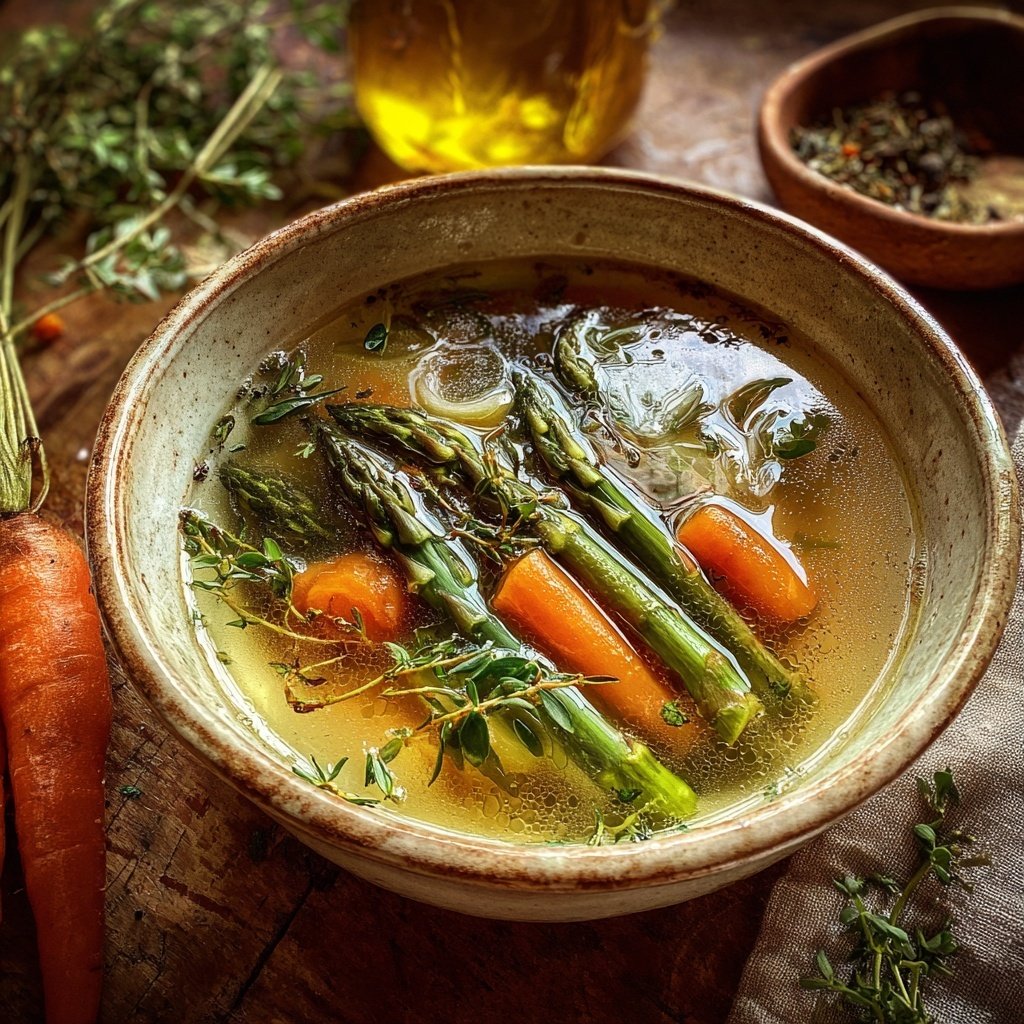
I love making Light Spring Vegetable Broth as the seasons change, especially when fresh vegetables are abundant. This broth is incredibly versatile and packed with flavor, perfect for a nourishing lunch or as a base for other dishes. With just a few fresh ingredients and some herbs, I can create a light yet satisfying broth that brightens up my day. Plus, it's so easy to customize with whatever veggies I have on hand, making it a staple in my kitchen all spring long.
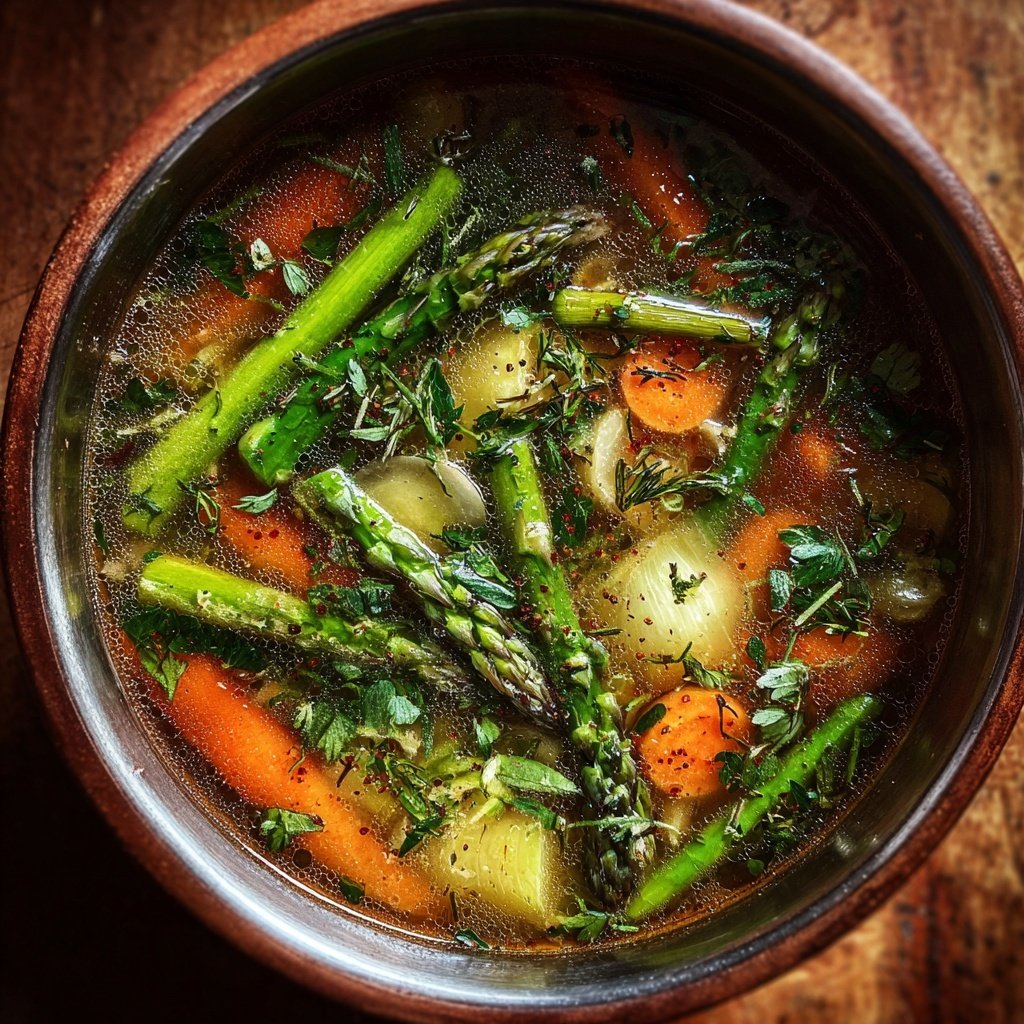
Creating the perfect Light Spring Vegetable Broth was a delightful experience! I experimented with various combinations of fresh vegetables and herbs from my garden. The key is to balance flavors, so I used slightly sweet carrots, aromatic leeks, and vibrant green beans. This combination not only gives depth to the broth but also looks beautiful.
I also discovered that simmering the vegetables for just the right amount of time ensures they retain their colors and nutrients. I love to finish the broth with fresh herbs like dill and parsley, which really brighten the dish and enhance its freshness!
Why You Will Love This Recipe
- Bright and refreshing flavors that evoke springtime.
- Versatile base that can complement many meals.
- Quick and easy to prepare, perfect for busy days.
Understanding the Broth Base
The foundation of a great vegetable broth lies in the balance of flavors from the base vegetables. Onions, garlic, carrots, and celery—collectively known as mirepoix—create a rich base that enhances the overall sweetness and depth of the dish. The sautéing process allows the natural sugars in these vegetables to caramelize slightly, contributing to a delightful sweetness that perfectly complements the fresh herbs found in the broth, enhancing the springtime essence.
Using fresh vegetables is crucial for achieving vibrant and bright flavors. Vegetables like leeks and green beans not only add their unique textures but also bring seasonal freshness to your broth. Opt for vegetables that are in season to ensure the best taste and nutritional value. If you happen to have asparagus or peas on hand, they can make great additions that blend seamlessly into the overall flavor profile.
Perfecting Your Simmer
When you simmer the broth, it's essential to control the heat properly. Start by bringing the mixture to a boil before reducing the heat to a gentle simmer. This allows the flavors to meld together slowly and prevents the vegetables from becoming overly mushy. I usually let my broth simmer for 20-30 minutes, but feel free to taste it after 20 minutes to ensure you’re getting the flavor intensity you desire. Adjust your simmer time based on your preference for strong or mild flavors.
A common pitfall when making broth is over-salting. Since you'll be seasoning the broth towards the end of the cooking process, add salt gradually. This way, you can control the flavor without overwhelming the dish. After the broth has simmered, taste before adding more salt, as some vegetable broths can contain sodium already. Fresh herbs should be added just before serving to maintain their color and vibrancy.
Ingredients
For the Broth
- 1 tablespoon olive oil
- 1 medium onion, chopped
- 2 cloves garlic, minced
- 2 medium carrots, sliced
- 2 celery stalks, sliced
- 1 small leek, sliced
- 1 cup green beans, trimmed and cut
- 4 cups vegetable broth or water
- 1 bay leaf
- Salt and pepper to taste
- Fresh herbs (dill, parsley) for garnish
Instructions
Sauté the Vegetables
In a large pot, heat the olive oil over medium heat. Add the chopped onion and garlic, and sauté until the onion becomes translucent, about 5 minutes.
Add Remaining Vegetables
Stir in the sliced carrots, celery, and leek. Cook for another 5 minutes, allowing them to soften slightly.
Simmer the Broth
Pour in the vegetable broth (or water) and add the green beans and bay leaf. Bring to a boil, then reduce the heat and let it simmer for 20-30 minutes.
Season and Serve
Remove the bay leaf, season with salt and pepper to taste, and garnish with fresh herbs before serving warm.
Professionele Tips
- Feel free to substitute any seasonal vegetables you have on hand. Swapping in zucchini or peas can add wonderful flavors. Additionally, using homemade broth can enhance the richness of the soup.
Variations and Additions
This Light Spring Vegetable Broth is highly customizable. If you enjoy a bit of spice, consider adding a pinch of red pepper flakes while sautéing the onions and garlic. For a more robust flavor, you can throw in a tablespoon of tomato paste before adding the broth. Another delicious variation is to include seasonal vegetables such as zucchini or bok choy for added texture and nutrients.
You can also transform this broth into a heartier meal by adding grains or legumes. Brown rice, quinoa, or small pasta can create a fulfilling dish. Simply add them to the broth after about 15 minutes of simmering to ensure they cook through without turning overly soft.
Storing and Reheating
This Light Spring Vegetable Broth can be stored in an airtight container in the refrigerator for up to 4 days. For longer storage, consider freezing the broth in portions using ice cube trays or freezer-safe bags, making it easy to grab just the right amount for future meals. To thaw, simply leave it in the fridge overnight or use the defrost setting on your microwave, and it will be ready for your next soup or stew.
When reheating the broth, do so gently over medium heat. Bring it back to a simmer to refresh the flavors, adding a splash of water if it seems too concentrated after storage. As a tip, always taste and adjust the seasoning after reheating, as flavors can change during storage.
Vragen Over Recepten
→ Can I make this broth in advance?
Yes! You can prepare this broth up to three days in advance and store it in the fridge. Reheat when ready to serve.
→ What can I add to the broth for extra protein?
You can add cooked beans, lentils, or shredded chicken for added protein.
→ Is this broth suitable for vegetarians?
Absolutely! As long as you use vegetable broth or water, it's perfect for vegetarians.
→ Can I freeze the broth?
Yes! Allow the broth to cool completely, and then store it in airtight containers or freezer bags for up to three months.
Light Spring Vegetable Broth
Gemaakt door: Elspeth Murray
Recepttype: Natuurlijke Gezonde Gerechten
Vaardigheidsniveau: Beginner
Eindportie: 4-6 servings
Wat je Nodig Hebt
For the Broth
- 1 tablespoon olive oil
- 1 medium onion, chopped
- 2 cloves garlic, minced
- 2 medium carrots, sliced
- 2 celery stalks, sliced
- 1 small leek, sliced
- 1 cup green beans, trimmed and cut
- 4 cups vegetable broth or water
- 1 bay leaf
- Salt and pepper to taste
- Fresh herbs (dill, parsley) for garnish
Stappen
In a large pot, heat the olive oil over medium heat. Add the chopped onion and garlic, and sauté until the onion becomes translucent, about 5 minutes.
Stir in the sliced carrots, celery, and leek. Cook for another 5 minutes, allowing them to soften slightly.
Pour in the vegetable broth (or water) and add the green beans and bay leaf. Bring to a boil, then reduce the heat and let it simmer for 20-30 minutes.
Remove the bay leaf, season with salt and pepper to taste, and garnish with fresh herbs before serving warm.
Extra Tips
- Feel free to substitute any seasonal vegetables you have on hand. Swapping in zucchini or peas can add wonderful flavors. Additionally, using homemade broth can enhance the richness of the soup.
Voedingswaarde (Per Portie)
- Calories: 50 kcal
- Total Fat: 2g
- Saturated Fat: 0g
- Cholesterol: 0mg
- Sodium: 120mg
- Total Carbohydrates: 10g
- Dietary Fiber: 2g
- Sugars: 3g
- Protein: 2g