Korean Bibimbap
Uitgelicht onder: Wereldkeukencollectie
Experience the vibrant flavors of Korea with this delicious Bibimbap dish. A perfect blend of rice, vegetables, and protein, all topped with a spicy gochujang sauce.
Korean Bibimbap is a colorful and nutritious dish that brings together a variety of ingredients. The word 'Bibimbap' means 'mixed rice', which perfectly describes how this dish is prepared. Each ingredient contributes to the dish's unique flavor and texture, making it a favorite among many.
Why You'll Love This Recipe
- A vibrant mix of flavors and textures in every bite
- Customizable with your choice of protein and vegetables
- Perfect for meal prep and can be enjoyed any time
The Essence of Bibimbap
Bibimbap is a quintessential Korean dish that translates to 'mixed rice.' It is a colorful medley of ingredients that not only pleases the palate but also provides a feast for the eyes. Traditionally, Bibimbap includes a variety of vegetables, a protein source, and a fried egg, all served over rice. This dish perfectly captures the philosophy of Korean cuisine, which emphasizes balance and harmony in flavors and textures.
The beauty of Bibimbap lies in its versatility. You can customize it according to your dietary preferences or the ingredients available in your kitchen. Whether you choose beef, chicken, tofu, or even seafood, the possibilities are endless. Additionally, the assortment of vegetables allows for seasonal variations, making it a year-round favorite.
Nutritional Benefits
Bibimbap is not just a delicious meal; it’s also a nutritious one. Packed with a variety of vegetables, this dish provides essential vitamins and minerals. Spinach, for instance, is rich in iron and antioxidants, while carrots offer a good dose of beta-carotene. The inclusion of protein from eggs and your choice of meat or tofu ensures that you’re getting a balanced meal that keeps you energized throughout the day.
Moreover, the gochujang sauce adds a kick of spice along with health benefits. Gochujang is known for its potential to boost metabolism and enhance digestive health. Combined with the healthy fats from sesame oil, this dish not only satisfies your taste buds but also contributes positively to your overall well-being.
Serving Suggestions
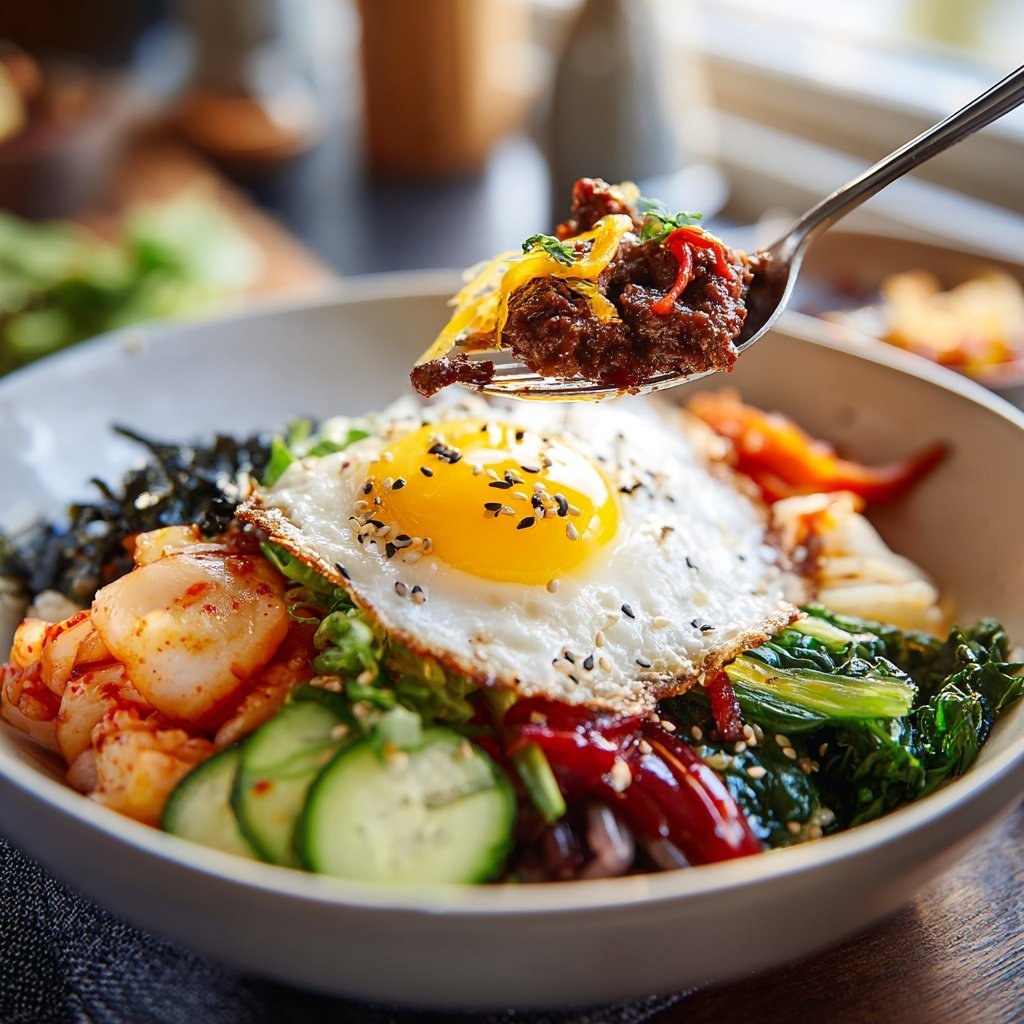
When serving Bibimbap, presentation is key. To truly appreciate the dish, serve it in a large bowl where each ingredient is beautifully arranged in sections, creating a vibrant visual appeal. This not only enhances the dining experience but also invites your guests to mix and enjoy the flavors in their own way. You can also serve it with an assortment of kimchi and pickled vegetables on the side for an authentic touch.
For a heartier meal, consider adding a side of Korean pancakes or mandu (dumplings). These accompaniments complement the Bibimbap wonderfully, providing additional textures and flavors. A chilled Korean beverage like Sikhye (sweet rice drink) would also make a refreshing pairing, especially during warmer months.
Ingrediënten
Ingredients for Korean Bibimbap
For the Bibimbap
- 2 cups cooked rice
- 1 cup spinach, blanched
- 1 cup bean sprouts, blanched
- 1 medium carrot, julienned
- 1 zucchini, julienned
- 4 eggs
- 1 cup sliced mushrooms
- 1 tablespoon vegetable oil
- Salt to taste
For the Gochujang Sauce
- 2 tablespoons gochujang
- 1 tablespoon sesame oil
- 1 tablespoon sugar
- 1 tablespoon water
- 1 teaspoon sesame seeds
Feel free to customize your Bibimbap with additional vegetables or proteins like chicken, beef, or tofu.
Bereidingswijze
Instructions for Preparing Bibimbap
Prepare the Vegetables
In a pan, heat a tablespoon of vegetable oil over medium heat. Sauté the mushrooms until golden brown. Set aside. In the same pan, briefly sauté the carrots and zucchini until tender. Season with salt.
Cook the Eggs
In a separate pan, fry the eggs sunny-side up until the whites are set but the yolks remain runny.
Assemble the Bibimbap
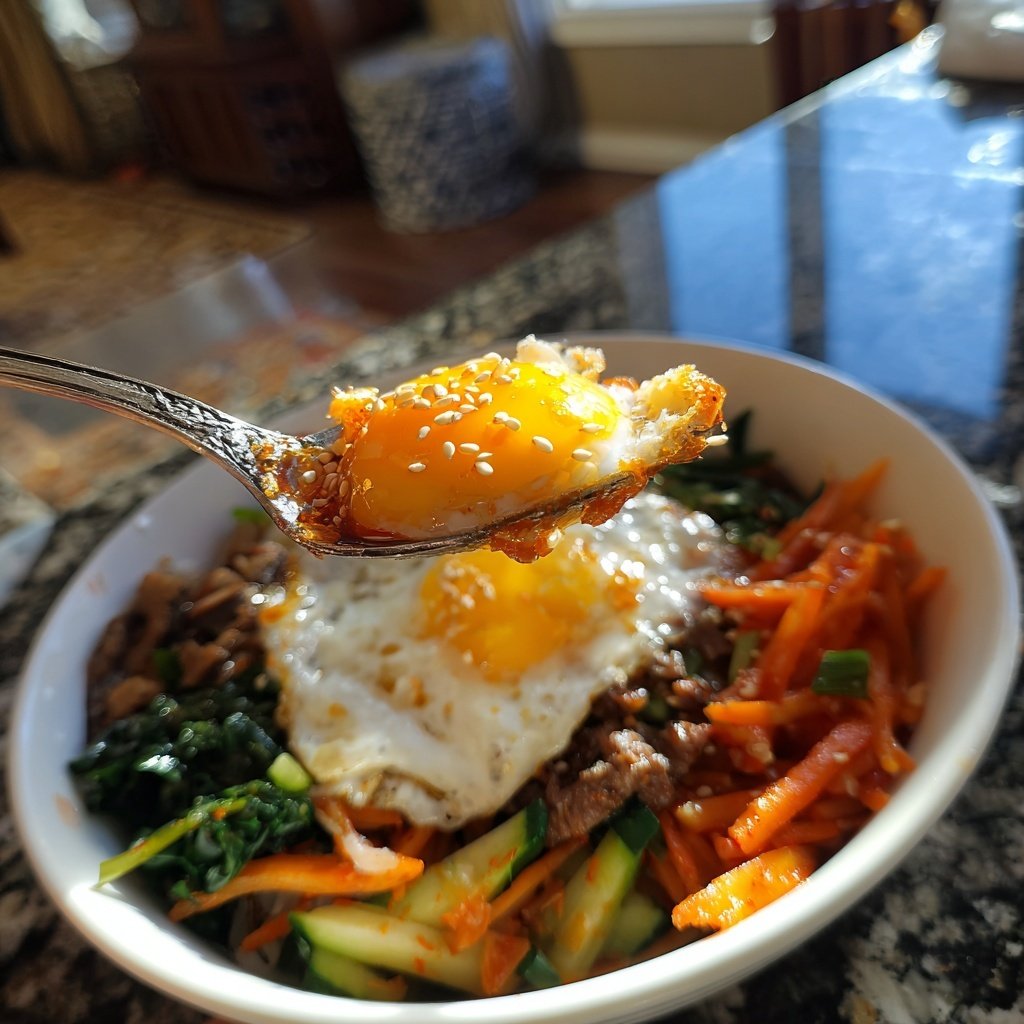
In a bowl, place a serving of rice at the bottom. Arrange the sautéed vegetables, bean sprouts, and spinach on top of the rice. Place the fried egg in the center.
Make the Gochujang Sauce
In a small bowl, mix together gochujang, sesame oil, sugar, water, and sesame seeds to make the sauce.
Serve
Drizzle the gochujang sauce over the bibimbap and mix well before eating. Enjoy your Korean Bibimbap!
Mix all ingredients thoroughly for the best flavor experience.
Professionele Tips
- For added flavor, try adding some sliced radishes or a sprinkle of seaweed on top.
Storing and Reheating
Leftover Bibimbap can be stored in an airtight container in the refrigerator for up to three days. However, to maintain the quality of the ingredients, it's best to store the components separately if possible. This way, when you're ready to enjoy your leftovers, you can reassemble it for a fresh taste.
To reheat, simply warm the rice in the microwave until heated through, and quickly sauté the vegetables again to restore their texture. If you prefer, you can also enjoy Bibimbap cold, which makes for a refreshing meal option, especially in the summer.
Variations to Try
While the traditional Bibimbap recipe is delightful, don’t hesitate to experiment with different ingredients. For a spicy twist, add some sliced jalapeños or a sprinkle of red pepper flakes. If you’re looking for a vegan option, swap the egg for avocado or tofu, and ensure the gochujang sauce is plant-based.
Another variation is to use quinoa or cauliflower rice instead of traditional white rice for a healthier twist. This not only adds a different flavor but also introduces new textures, making your Bibimbap experience even more exciting.
Vragen Over Recepten
→ Can I make Bibimbap vegetarian?
Absolutely! Simply skip the eggs or use a plant-based alternative.
→ What can I use instead of gochujang?
You can use sriracha as a milder substitute, but it will change the flavor slightly.
→ How long does leftover Bibimbap last?
Leftover Bibimbap can be stored in the refrigerator for up to 3 days.
→ Can I freeze Bibimbap?
It's best to freeze the components separately to maintain their texture. Cooked rice and vegetables freeze well.
Korean Bibimbap
Gemaakt door: Elspeth Murray
Recepttype: Wereldkeukencollectie
Vaardigheidsniveau: Intermediate
Eindportie: 4 servings
Wat je Nodig Hebt
For the Bibimbap
- 2 cups cooked rice
- 1 cup spinach, blanched
- 1 cup bean sprouts, blanched
- 1 medium carrot, julienned
- 1 zucchini, julienned
- 4 eggs
- 1 cup sliced mushrooms
- 1 tablespoon vegetable oil
- Salt to taste
For the Gochujang Sauce
- 2 tablespoons gochujang
- 1 tablespoon sesame oil
- 1 tablespoon sugar
- 1 tablespoon water
- 1 teaspoon sesame seeds
Stappen
In a pan, heat a tablespoon of vegetable oil over medium heat. Sauté the mushrooms until golden brown. Set aside. In the same pan, briefly sauté the carrots and zucchini until tender. Season with salt.
In a separate pan, fry the eggs sunny-side up until the whites are set but the yolks remain runny.
In a bowl, place a serving of rice at the bottom. Arrange the sautéed vegetables, bean sprouts, and spinach on top of the rice. Place the fried egg in the center.
In a small bowl, mix together gochujang, sesame oil, sugar, water, and sesame seeds to make the sauce.
Drizzle the gochujang sauce over the bibimbap and mix well before eating. Enjoy your Korean Bibimbap!
Extra Tips
- For added flavor, try adding some sliced radishes or a sprinkle of seaweed on top.
Voedingswaarde (Per Portie)
- Calories: 550 kcal
- Total Fat: 18g
- Saturated Fat: 3g
- Cholesterol: 186mg
- Sodium: 600mg
- Total Carbohydrates: 80g
- Dietary Fiber: 5g
- Sugars: 5g
- Protein: 16g